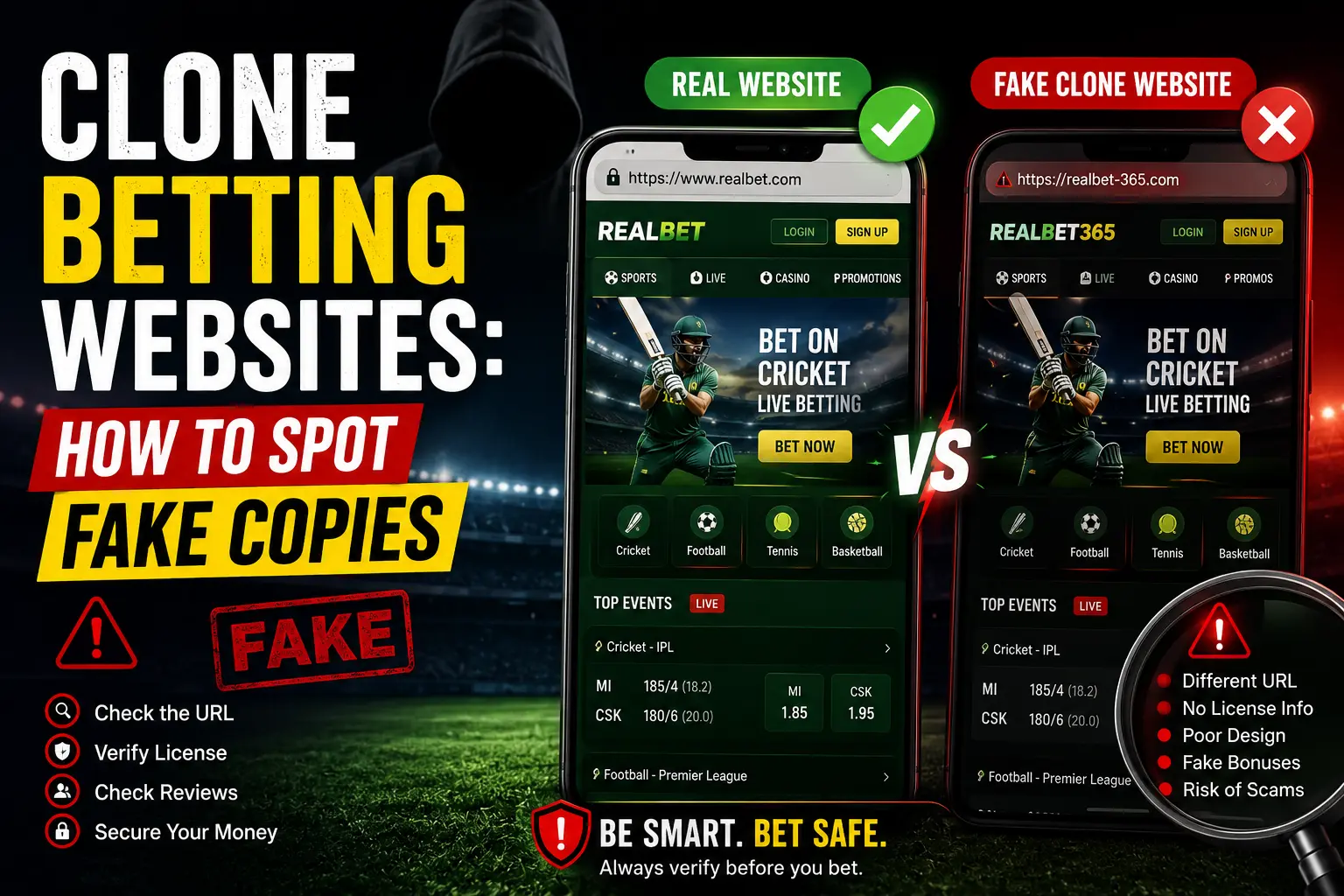
Clone betting websites are becoming one of the most common online threats in the gaming industry. These fake websites are designed to look almost identical to popular betting platforms, making it difficult for users to recognize the difference.
Scammers create these copies to trick users into registering, sharing personal information, or making deposits on fraudulent platforms. Because the websites often look professional, many people assume they are genuine without checking important details.
What Are Clone Betting Websites?
Clone betting websites are fake platforms that imitate the design, logo, colors, and layout of well-known betting brands. The goal is simple: make users believe they are visiting the original website when they are actually using a fraudulent copy.
These websites may appear through:
- Sponsored advertisements
- Social media promotions
- WhatsApp or Telegram messages
- Search engine results
- Links shared by unknown users
Because the copy looks familiar, users may not realize they are on the wrong website.
Why Scammers Create Clone Websites
Scammers create clone betting websites to exploit the trust people already have in popular brands. Instead of building a new reputation, they copy an existing one.
Their objective may include:
- Collecting personal information
- Stealing login credentials
- Taking deposits without providing services
- Misusing payment details
- Creating confusion among users
This is why it is important to verify a website before signing up.
How Clone Websites Look Genuine
Modern clone websites can be very convincing.
They often copy:
- The original brand logo
- Website colors and design
- Promotional banners
- Customer testimonials
- Navigation menus
- Login pages
At first glance, the fake website may appear exactly like the original platform. However, small details often reveal the truth.
Check the Website URL Carefully
One of the easiest ways to identify a clone betting website is by checking the URL. Scammers often create addresses that look similar to the original domain.
For example, they may:
- Add extra letters
- Replace letters with numbers
- Use hyphens
- Change the domain extension
- Add words before or after the brand name
A quick glance may not be enough. Always read the full URL carefully.
Look for HTTPS Security
A secure website usually starts with https:// and shows a padlock icon in the browser.
1) However, HTTPS alone does not guarantee that the website is genuine.
2) Some clone websites also use HTTPS certificates to appear trustworthy.
3) This is why users should check security along with other verification steps.
Compare With the Official Website
If you are unsure whether a website is genuine, compare it with the official platform.
Check:
- The exact domain name
- Contact information
- Terms and Conditions
- Privacy Policy
- Customer support details
- Official social media accounts
Differences in these areas can reveal that the website is a clone.
Common Warning Signs
Clone betting websites often display warning signs that users should not ignore.
Be cautious if you notice:
- Poor grammar or spelling mistakes
- Broken links
- Missing policy pages
- Unrealistic bonus offers
- No clear company information
- Limited customer support
- Pressure to register quickly
A legitimate platform usually provides clear and transparent information.
Beware of Fake Promotions
Clone websites frequently attract users with offers that seem too good to be true.
Examples include:
- Guaranteed winnings
- Huge welcome bonuses
- Instant withdrawals without verification
- Risk-free betting opportunities
- Exclusive VIP rewards
These promotions are designed to create urgency and reduce the time users spend verifying the platform.
Never Trust Ads Alone
1) Many users assume that a website appearing in an advertisement is automatically genuine.
2) This is not always true.
3) Scammers may use paid ads or fake promotional campaigns to direct users to clone websites.
4) Instead of clicking random ads, type the official website address directly into your browser whenever possible.
Protect Your Login Information
Never enter your username, password, OTP, or banking details on a website unless you are certain it is genuine.
If you accidentally enter information on a suspicious website, change your passwords immediately and monitor your accounts for unusual activity.
Research Before You Register
Before creating an account, spend a few minutes researching the platform.
Check for:
- Independent user reviews
- Official contact details
- Transparent policies
- Secure payment information
- A professional website structure
This simple habit can help you avoid many online scams.