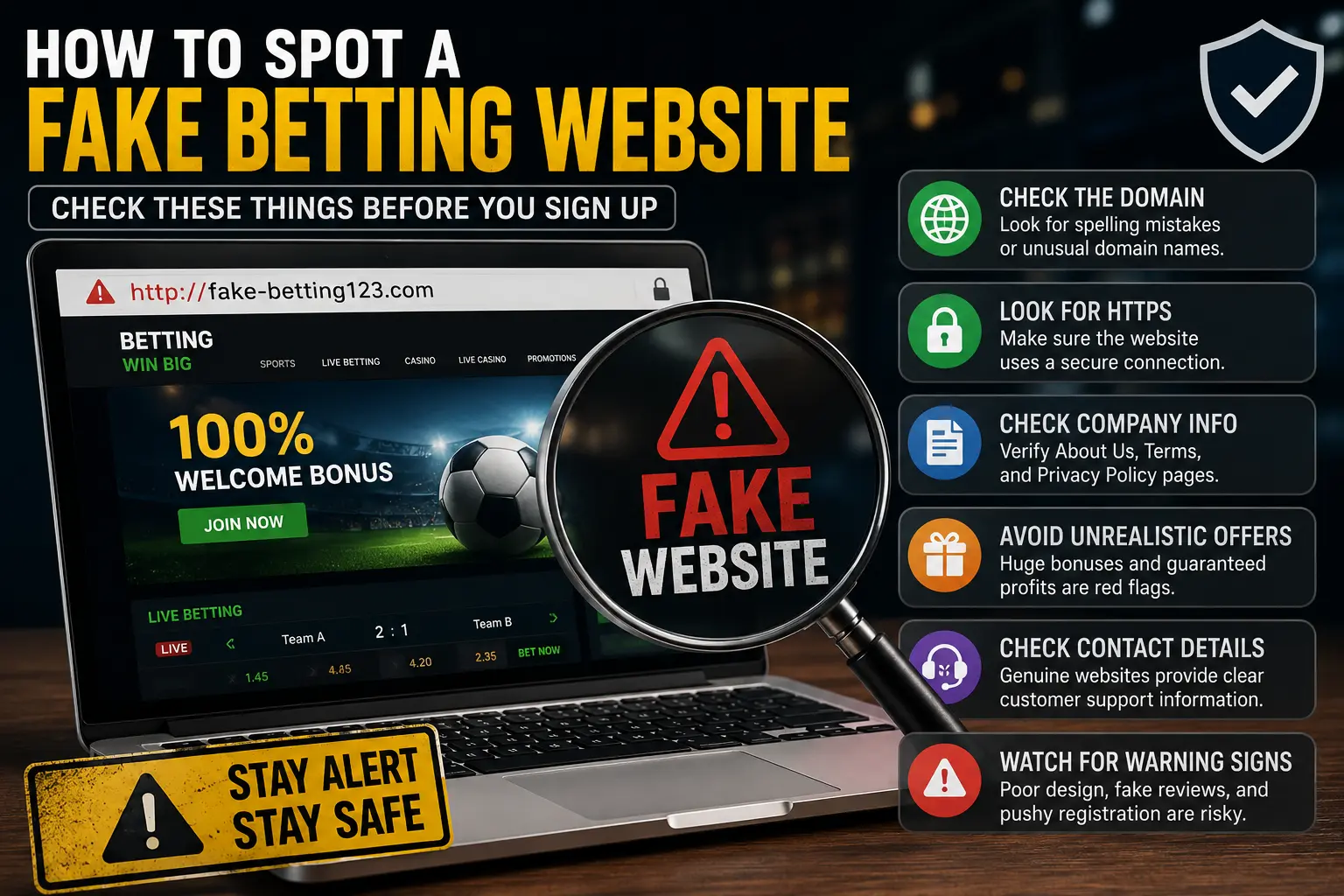
Finding a betting website online is easy, but knowing whether the website is genuine is much more important. Some websites are created to look like legitimate platforms while their real purpose is to collect personal information, payment details, or account credentials.
A fake betting website may copy the name, logo, colors, and layout of another platform. At first glance, it can look completely normal. However, small details such as the domain name, missing company information, poor website policies, or suspicious payment requests can reveal warning signs.
Before signing up for any betting website, take a few minutes to check the platform carefully. Here are some of the most important things to look for.
Check the Website Domain Carefully
The domain name should be one of the first things you check. Scammers often create addresses that look similar to genuine websites by changing a few letters, adding extra words, or using unusual domain extensions.
Do not assume that a website is genuine simply because its name looks familiar. Compare the domain with information published through reliable or official sources. A small spelling difference can sometimes be an important warning sign.
This is especially important when a website has recently changed its domain. You can also read our guide on why betting websites change their domain names to understand how legitimate domain changes can happen.
Look for HTTPS and Basic Security
Check whether the website uses HTTPS when you open it. You will usually see a padlock symbol in the browser’s address bar.
HTTPS helps protect information sent between your browser and the website. However, it is important to understand that HTTPS alone does not prove that a betting website is legitimate. Scam websites can also use HTTPS.
Think of HTTPS as one basic security check rather than proof that a website can be trusted.
Check the Website’s Company Information
A genuine website should provide clear information about the business operating it. Look for pages such as About Us, Contact Us, Terms and Conditions, Privacy Policy, and other relevant information.
Read these pages rather than simply checking whether they exist. Poorly written policies, copied text, missing company details, or contradictory information can be warning signs.
If you cannot find basic information about who operates the website, take extra care before creating an account.
Be Careful With Unrealistic Offers
Very large bonuses, guaranteed profits, or offers that seem too good to be true should make you stop and investigate.
Scammers often use attractive promotions to encourage people to register quickly. They may create a sense of urgency by saying that an offer will disappear within minutes or that only a limited number of users can claim it.
A genuine-looking website can still use aggressive marketing, so do not make your decision based only on a bonus or promotional offer.
Check the Contact Information
A website should make it reasonably clear how users can contact its support team.
Look for a working contact page and consistent information across the website. Be cautious if the only contact method is an anonymous messaging account or an unfamiliar number.
You can also check whether the contact details appear professional and relevant to the business. Missing or suspicious contact information is an important reason to investigate further.
Watch Out for Poor Website Quality
Fake websites are sometimes created quickly and may contain obvious quality problems.
Look for broken pages, strange grammar, copied images, missing sections, inconsistent branding, or links that do not work. One small mistake does not automatically mean a website is fake, but several problems together should make you more cautious.
Pay particular attention to login and registration pages. A copied login page can be designed to collect usernames and passwords from visitors.
Don’t Trust Every Review You Find Online
Reviews can help when researching a website, but you should not depend on a single review or rating.
Some websites may display only positive testimonials on their own pages. Similarly, fake accounts can sometimes post misleading comments on social media or forums.
Look for information from multiple independent sources and compare what different users are saying. If you notice repeated complaints about withdrawals, account access, or unexpected payment requests, investigate further before signing up.
Be Careful With Unexpected Links
Many people discover betting websites through search results, social media, messaging apps, and online communities. Not every link shared through these channels is trustworthy.
If someone sends you a link and claims it is the “new official website,” do not immediately enter your login or payment information. Verify the domain first.
This is particularly important when the original website is unavailable. As we discussed in our article about websites suddenly stopping work, an outage can sometimes lead users toward unofficial replacement domains.
Never Rush Into Registration
One of the simplest ways to protect yourself is to slow down.
You do not need to register immediately just because a website is offering a limited-time promotion. Spend a few minutes checking the domain, company information, security details, policies, and reputation.
If something feels inconsistent or unusually urgent, step back and investigate before continuing.
A Simple Fake Website Checklist
Before signing up, check:
- Is the domain spelled correctly?
- Does the website use HTTPS?
- Is company information available?
- Are the Terms and Privacy Policy easy to find?
- Is customer support information provided?
- Does the website contain broken links or suspicious content?
- Are the promotional claims realistic?
- Can the website be verified through reliable sources?
- Are you being pressured to register or make a payment immediately?
The more warning signs you find, the more carefully you should investigate the website.
Final Thoughts
A fake betting website can look surprisingly convincing, which is why checking a website only by its appearance is not enough. Scammers can copy logos, colors, layouts, and even entire pages from established platforms.
Before signing up, check the domain carefully, review the website’s policies, look for genuine company information, examine the contact details, and be cautious with unrealistic offers.
Most importantly, do not rush because of a bonus, message, or limited-time promotion. A few minutes spent verifying a website can help you avoid much bigger problems later.