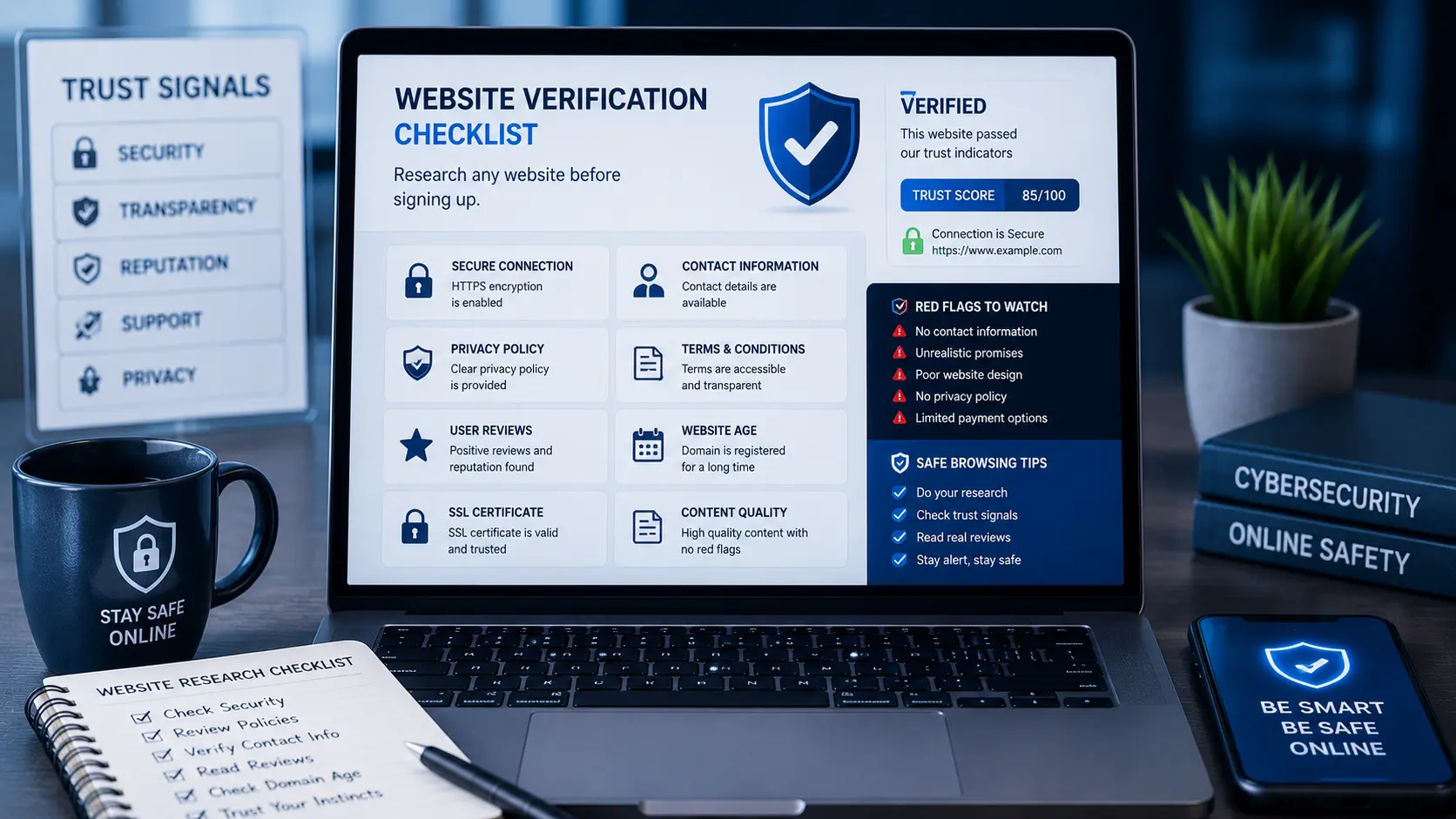
The internet gives us access to thousands of websites every day. Whether you’re creating an account, subscribing to a service, or exploring a new platform, it is important to know who you’re dealing with before sharing personal information.
Many users make decisions based solely on a website’s appearance. Unfortunately, modern scam websites often look just as professional as legitimate ones. This is why learning how to research a website before signing up has become an essential online safety skill.
Fortunately, website verification does not require technical expertise. A few simple checks can help users make more informed decisions.
Why Website Research Matters
A website may look trustworthy at first glance, but appearance alone is not enough.
Before creating an account, users should understand:
- Who operates the website
- How user data is handled
- Whether support is available
- What policies are in place
- How transparent the platform is
Taking a few minutes to investigate can help reduce risks and improve online safety.
Start With the Website Itself
The first step is reviewing the information available directly on the platform.
Reliable websites usually provide:
- About Us page
- Contact information
- Privacy Policy
- Terms and Conditions
- Support resources
These pages help establish transparency and demonstrate professionalism.
If important information is difficult to find, users should proceed carefully.
Check Website Security
A secure website should use HTTPS encryption.
Look for:
- HTTPS in the address bar
- A security padlock icon
- Secure login pages
While HTTPS does not guarantee legitimacy, it is one of the most basic trust indicators.
Review Contact Information
Trustworthy platforms make it easy for users to get help.
Look for:
- Email support
- Contact forms
- Live chat options
- Help centers
The absence of support information can be a warning sign.
Read User Reviews Carefully
User experiences can provide valuable insights.
When reading reviews:
- Use multiple sources.
- Look for consistent patterns.
- Consider both positive and negative feedback.
- Focus on transparency and support experiences.
Avoid relying entirely on a single review source.
Evaluate Website Quality
Professional websites usually maintain a consistent user experience.
Warning signs include:
- Broken pages
- Outdated information
- Poor grammar throughout the site
- Confusing navigation
- Missing content
These issues do not automatically indicate fraud, but they can suggest a lack of professionalism.
Understand the Website’s Policies
Many users ignore policy pages, but these sections often contain valuable information.
Review:
- Terms and Conditions
- Privacy Policy
- Account policies
- Payment procedures
Transparent policies help users understand what to expect.
Watch for Unrealistic Claims
One of the most common warning signs is unrealistic promises.
Examples include:
- Guaranteed profits
- Instant success
- Risk-free opportunities
- Exclusive offers that seem impossible
Legitimate businesses generally avoid making guarantees that cannot be verified.
Search Beyond the Website
Research should not stop with the platform itself.
Search for:
- Industry mentions
- News coverage
- Independent reviews
- Community discussions
- Public feedback
A broader search often reveals information that may not be visible on the website.
For readers interested in learning more about identifying suspicious websites, this guide explains several important verification checks:
Create a Personal Verification Checklist
Before signing up for any platform, ask yourself:
Is the website secure?
Are policies available?
Is contact information provided?
Does the platform appear transparent?
Are user experiences generally positive?
Have I researched the website independently?
If the answer is “no” to several questions, additional research is recommended.
Final Thoughts
In 2026, researching a website before signing up is one of the simplest ways to improve online safety. Modern websites can look professional regardless of their legitimacy, making verification more important than ever.
By checking transparency, security, support options, policies, and reputation, users can make better-informed decisions and reduce unnecessary risks online.